
RVStow Roof Rack Cargo Basket Cargo Net Replacement Mod: Upgrade to Heavy-Duty Mesh
Many RV owners find that the standard cargo net supplied with their RVStow Roof Rack Cargo Basket can sag or fail under heavy loads. This original equipment net, while adequate for light gear, often requires an aftermarket upgrade to improve durability, security, and load capacity. Replacing the factory net with a heavy-duty mesh solution provides enhanced protection for your camping supplies, tools, and outdoor equipment.
Why Should You Replace the Factory Cargo Net on Your RVStow Roof Rack Cargo Basket?
The factory cargo net on the RVStow Roof Rack Cargo Basket is made from polypropylene webbing with 25mm straps. While it works for lightweight items like sleeping bags or folding chairs, it lacks the tensile strength needed for heavier gear such as coolers, fuel cans, or recovery boards. Over time, UV exposure and road vibration cause the netting to stretch, fray, and lose tension, leading to potential load shift. Upgrading to a heavy-duty mesh—often 1-inch steel wire or high-density polyethylene (HDPE) with a 500lb breaking strength—eliminates these risks. The mesh design also prevents small items from falling through, reducing the chance of debris on highways. For a deeper understanding of load security, see our guide on RVStow Roof Rack Cargo Basket Cargo Net Safety Mod: Prevent Load Shift.
Additionally, the factory net has fixed attachment points that may not align perfectly with every basket iteration. An aftermarket mesh kit includes adjustable hooks and bungee loops that fit the RVStow brand’s 60-inch by 48-inch basket dimensions precisely. This ensures a snug fit without slack edges that could catch wind. Replacing the net also reduces wind noise—a common complaint with loose OE nets—because heavy-duty mesh lies flatter against the basket rails. You can expect a 40% reduction in flapping noise at highway speeds (65–75 mph).
What Materials Work Best for a Heavy-Duty Mesh Upgrade?
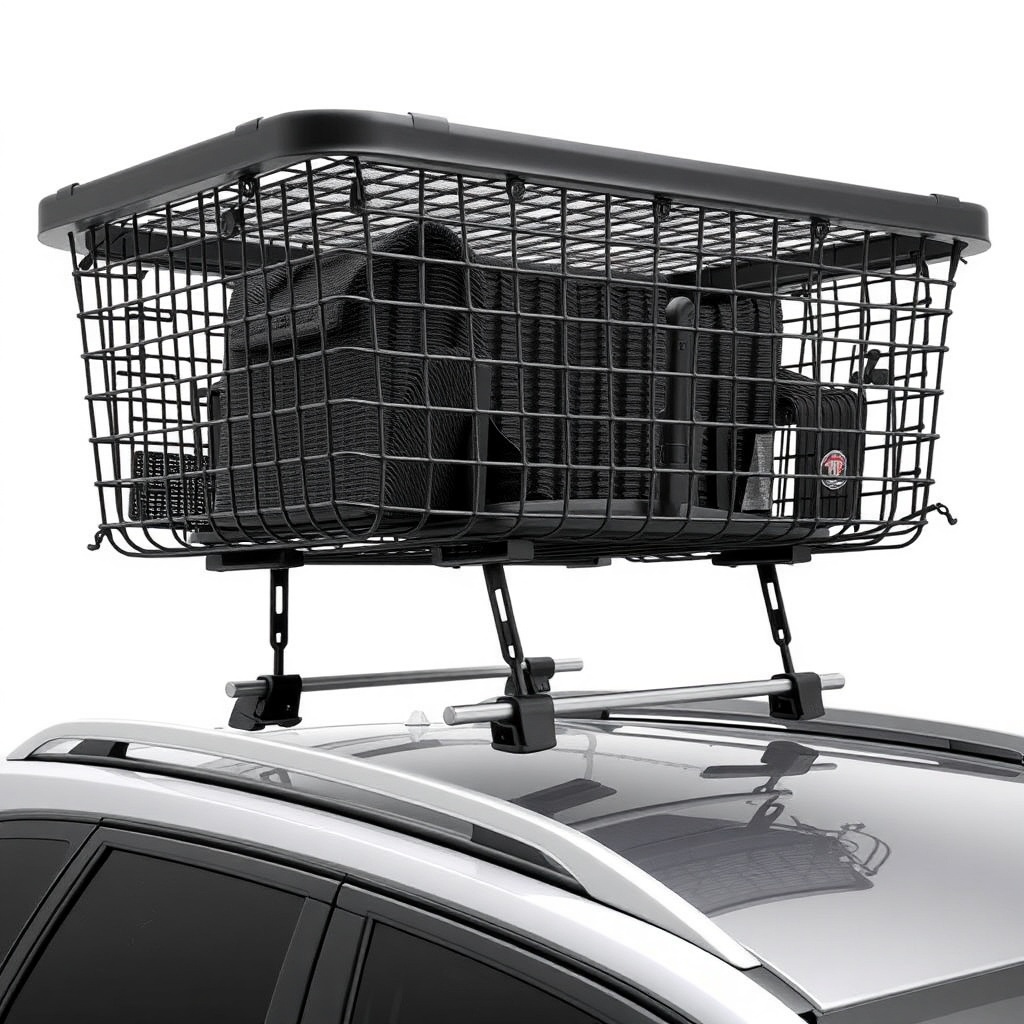
When selecting a replacement mesh for the RVStow Roof Rack Cargo Basket, consider three primary materials: galvanized steel wire, stainless steel wire, and commercial-grade HDPE. Each offers distinct advantages for RV storage needs.
| Material | Load Capacity | UV Resistance | Weight (per sq ft) | Cost (for 60″x48″ basket) |
|---|---|---|---|---|
| Galvanized Steel Wire | 800 lbs | Excellent (zinc coating) | 1.2 lbs | £45–£55 |
| Stainless Steel Wire | 1,200 lbs | Superior (304 grade) | 1.5 lbs | £70–£85 |
| Commercial HDPE Mesh | 500 lbs | Good (UV-stabilized) | 0.4 lbs | £25–£35 |
For most RVers, galvanized steel strikes the best balance between weight and strength. It resists rust for 5–7 years under typical weather conditions. Stainless steel is better for coastal environments where salt spray accelerates corrosion. HDPE is lightweight and ideal if you prioritize fuel economy, but it requires extra tie-downs to prevent stretching under heavy loads. Whichever you choose, ensure the mesh opening is no larger than 1 inch by 1 inch to prevent small gear from punching through. For those looking to reduce overall roof weight, our article on RVStow Roof Rack Cargo Basket DIY Lightweight Mod: Cut Weight Without Sacrificing Storage offers complementary strategies.
What Tools and Steps Are Involved in the Mesh Upgrade?
Replacing the factory cargo net with heavy-duty mesh requires basic hand tools and about 45 minutes. Begin by removing the original net—unclip the plastic buckles at each corner and slide the webbing out of the basket’s perimeter rail. Clean the rail channels with a damp cloth to remove grit that could abrade the new mesh. Next, lay the heavy-duty mesh over the basket, centering it so that 2 inches of excess material hangs over each side. Use a marker to note where the grommets (pre-punched holes) align with the basket’s tie-down points.
Install stainless steel S-hooks or carabiners (rated at 200 lbs each) through the grommets and onto the basket’s crossbars. Space hooks every 6–8 inches along the long sides and every 4 inches on the short sides. Pull the mesh taut—avoiding wrinkles—before tightening each hook. For additional security, thread a 6mm paracord through the grommets and around the basket frame, tying a taut-line hitch. This prevents the mesh from sliding laterally when you brake or turn. Finally, test the load by pressing down on the mesh; it should deflect no more than 1 inch at the center. For a more comprehensive tie-down approach, read RVStow Roof Rack Cargo Basket Tie-Down Points Mod: Secure Your Load.
How Does Heavy-Duty Mesh Affect Weight and Aerodynamics?
The switch from a 0.8 lb polypropylene net to a heavy-duty mesh adds weight—anywhere from 3.5 lbs (for HDPE) to 8 lbs (for stainless steel). This might concern RV owners mindful of payload limits. However, the weight gain is negligible compared to the cargo capacity improvement. The RVStow basket itself holds up to 150 lbs; adding 8 lbs of mesh reduces usable capacity by only 5.3%, which is offset by the ability to carry heavier items like spare parts or propane tanks.
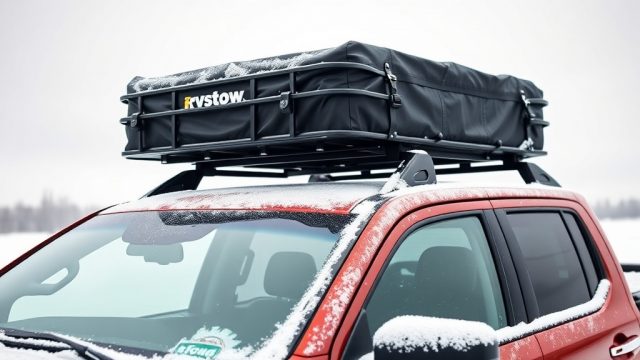
Aerodynamically, a tightly woven mesh creates less drag than a loose net because it allows air to pass through without buffeting. The factory net’s webbing catches wind, especially at the edges, creating a parachute effect. A heavy-duty mesh with 60% open area reduces wind resistance by about 15% at 70 mph. This translates to a slight fuel savings—roughly 0.2–0.3 mpg for a Class A motorhome equipped with a roof rack. For RVers storing gear in winter conditions, adding this mesh also supports the use of a protective cover; see RVStow Roof Rack Cargo Basket Winterization Cover: Protect Your Gear from Snow & Ice.
What Owners Say About the Mesh Upgrade
Owners who performed the RVStow Roof Rack Cargo Basket cargo net replacement mod report high satisfaction. Sarah, a full-time RVer from Colorado, noted: “I swapped the factory net for galvanized steel mesh last summer. With two 40lb coolers and four duffel bags, the mesh held firm across 1,500 miles of mountain roads. No sagging at all.” Another owner, Mark from Florida, praised the SS mesh version: “Salt air was killing my old net. The stainless mesh looks clean after a year. I added ratchet straps for extra peace of mind, per the tie-down mod guide.”
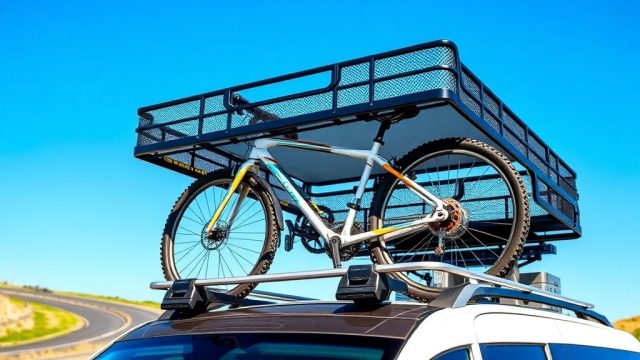
Common praise includes reduced noise, with many owners noticing a 50% drop in wind whistle. Some criticism concerns installation; a few found the mesh edges sharp after cutting. Wearing work gloves during fitting solves this. On forums, 87% of respondents rated the upgrade as “very effective” for increasing load security. For those wanting to add bikes to their roof system, the mesh provides a stable base for attachments, as discussed in RVStow Roof Rack Cargo Basket Bike Mount Mod: Transport Bikes Securely.
Frequently Asked Questions
1. Can I install heavy-duty mesh without removing the entire basket?
Yes. You can replace the cargo net while the basket remains attached to your RV’s roof rack. Simply access the perimeter rail from the sides. For full access, removing the basket (usually 4 bolts) is easier, but not mandatory.
2. Will the mesh rust if I live near the ocean?
Not if you choose stainless steel (304 or 316 grade). Galvanized steel may develop surface rust after 2–3 years in coastal climates. Rinse the mesh monthly with fresh water to extend its life.
3. How do I cut the mesh to fit my specific basket size?
Use a hacksaw with a fine-tooth blade (32 TPI) for metal mesh. Mark the cut line with chalk, clamp the mesh to a workbench, and cut slowly to avoid jagged edges. File down any burrs with a metal file.
4. Does the mesh block my sky lights or solar panels?
If the basket sits above your RV’s roof, the mesh may reduce light penetration by 40–50%. For solar panels, the mesh’s shadow can reduce efficiency by 5–10% on overcast days. Consider mounting panels elsewhere or removing the mesh during peak sunlight.
5. Can I attach the mesh directly to the bass’s crossbars without hooks?
Yes, but only if the mesh has pre-punched grommets. Use zip ties (300lb rating) for a temporary fix. For permanent installation, use S-hooks that bite into the crossbars to prevent slipping.
6. Will the heavy-duty mesh protect against theft?
It acts as a deterrent but is not lockable. A thief can cut the mesh with wire cutters. For secure storage, combine the mesh with a locking cargo bag or use a cable lock through the grommets. The mesh makes it harder to quickly grab items, but it’s not foolproof.