Why Upgrade the Tie-Down Points on Your RVStow Roof Rack Cargo Basket?
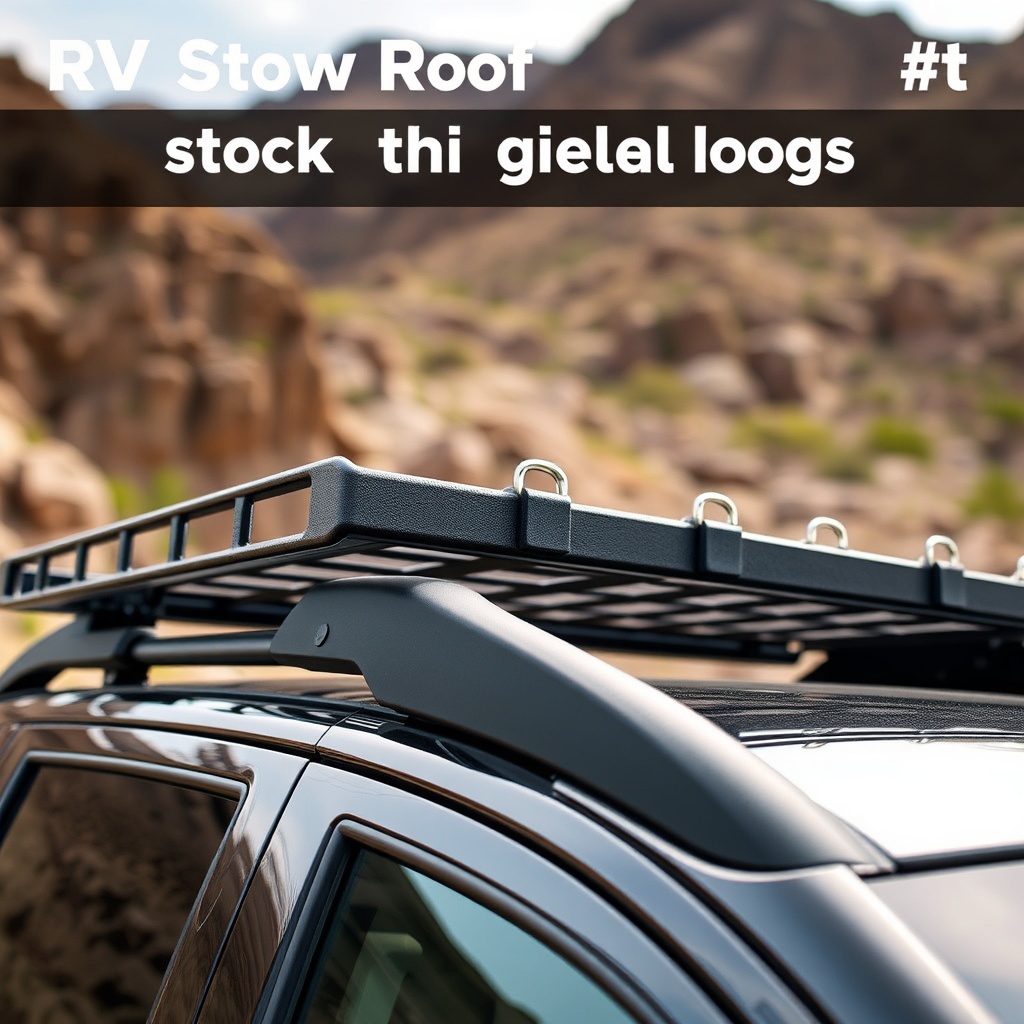
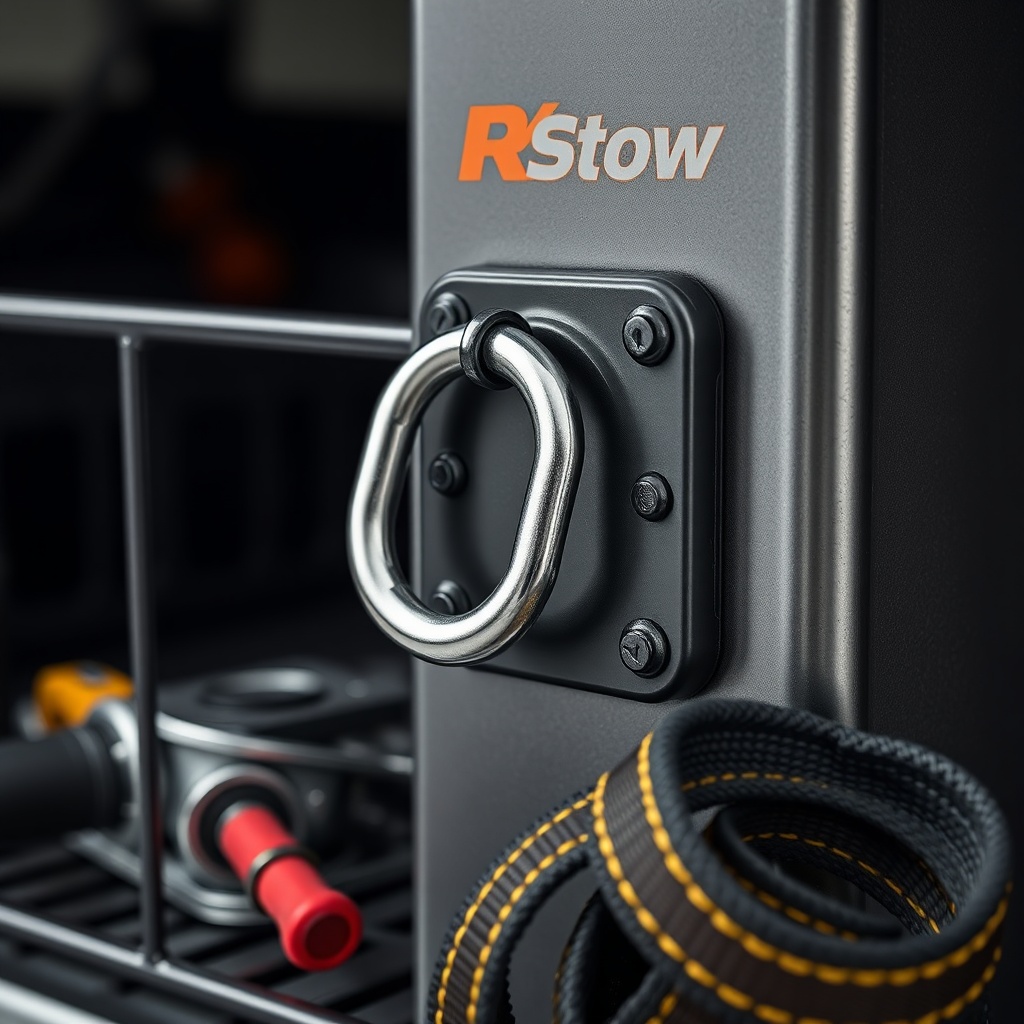
The RVStow Roof Rack Cargo Basket is a robust performer for hauling camping gear, recovery boards, and extra luggage on your RV or overland rig. But many owners quickly learn that the as-delivered tie-down points—typically a few stamped-metal loops and wire slots—can struggle under heavy loads or off-road vibration. A simple tie-down points modification transforms your basket from a decent carrier into a truly secure storage platform. By adding high-strength D-rings, welded tabs, or reinforced anchor plates, you eliminate load shift, protect your gear, and gain peace of mind on every journey. This guide walks through practical, DIY-friendly ways to upgrade your basket’s tie-down system.
If you’re also considering other basket upgrades, check out the RVStow Roof Rack Cargo Basket DIY Lightweight Mod for complementary weight savings.
What Makes the Stock Tie-Down Points Insufficient for Heavy Loads?
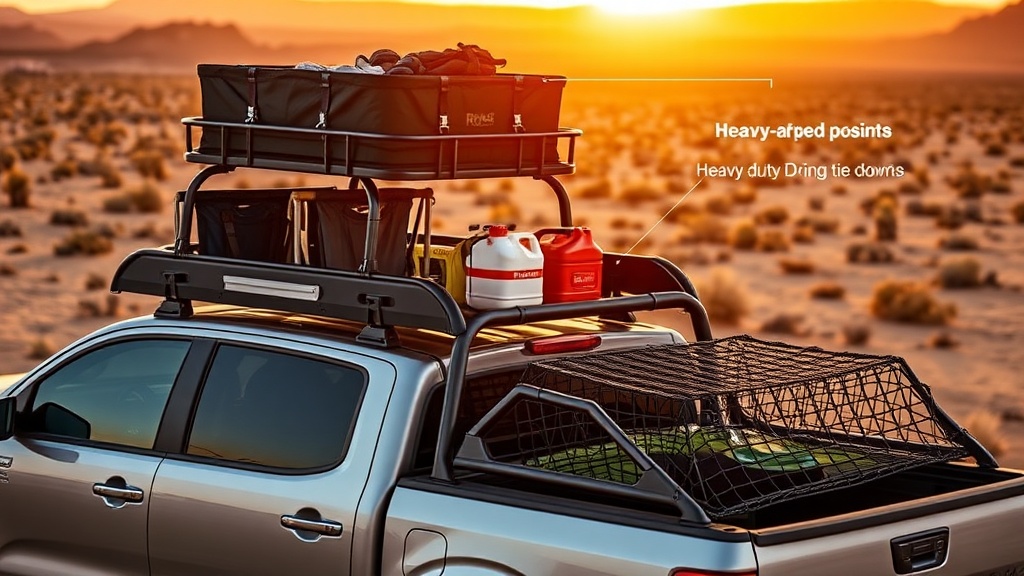
The factory tie-down points on the RVStow Roof Rack Cargo Basket are adequate for light cargo like sleeping bags or folding chairs, but they fall short when you start loading heavy items such as jerry cans, solar panels, or full-sized spare tires. The stock loops are often only spot-welded to the basket’s crossbars and can fatigue over time, especially if you’re frequently driving on rough terrain. In worst-case scenarios, a single point might shear off, causing your load to shift dangerously.
- Material gauge: Stock loops are typically 1/8-inch steel, which bends under 200+ lb of lateral force.
- Weld integrity: Spot welds are weaker than full penetration welds and can crack with thermal cycling.
- Spacing: Factory points are often too far apart for evenly distributing load across your cargo net or ratchet straps.
For those mounting solar panels, see the RVStow Roof Rack Cargo Basket Solar Panel Mounting Compatibility guide to ensure your electrical gear stays secure.
Which Materials and Tools Do I Need for the Tie-Down Points Mod?
Before diving into the upgrade, gather these essential materials and tools. Most items are available at hardware stores or online fabricators.
| Component | Specification | Estimated Cost (USD) |
|---|---|---|
| Load-rated D-rings (welded type) | 1/4-inch steel, 1,200 lb working load limit | $12–$18 per pair |
| Reinforcement plates (steel or aluminum) | 3/16-inch thick, 3×3 inches | $8–$12 each |
| M8 stainless steel bolts, lock washers, nylock nuts | Grade 8.8 or better | $6 for a pack of 10 |
| Structural epoxy or weld-through primer | For bonding plates to basket | $15 per tube |
| Drill with cobalt bits (for hardened steel) | 1/4-inch and 11/32-inch bits | $25–$40 |
| Heavy-duty cargo net or ratchet straps | 1-inch wide, breaking strength 500 lb+ | $20–$30 |
Total investment: roughly $60–$100, depending on how many points you upgrade. This is a fraction of a replacement basket’s cost.
How to Install Reinforced D-Ring Tie-Down Points on Your Basket?
This step-by-step process applies to most crossbar-style roof racks, including the RVStow Roof Rack Cargo Basket. Always wear safety glasses and work gloves.
- Remove the basket from your vehicle and place it on a sturdy workbench. Clean all intended mounting areas with acetone to remove grease.
- Mark your tie-down positions based on your typical load configuration. For balanced tension, aim for four corners and two midpoint positions per side.
- Drill pilot holes using a cobalt drill bit. Go slowly with cutting oil to avoid heat hardening the steel.
- Enlarge holes to 11/32-inch for an M8 bolt. Deburr all edges with a file.
- Attach reinforcement plates on the underside of the basket using structural epoxy or by welding (if you have the skill). This spreads load across a wider area.
- Bolt the D-rings through the basket and plate, using a lock washer and nylock nut. Torque to 20–25 ft-lb. Do not overtighten—this can deform thin crossbars.
- Test each point with a spring scale, pulling to 200 lb to verify weld/bolt integrity.
For adding an aerodynamic component alongside your tie-down points, read the Aerodynamic Fairing Installation for RVStow Roof Rack Cargo Basket: Reduce Drag & Noise guide.
What Are the Best Alternative Tie-Down Methods Besides D-Rings?
If welding or drilling into your basket isn’t an option, several non-permanent alternatives provide robust tie-down points without altering the basket structure.
- One-piece wire loops: These clamp onto round or square crossbars, offering a 360-degree anchor. Look for 304 stainless steel with a 500 lb capacity. Cost is around $10 each.
- Loop-style ratchet straps: Some straps have integrated steel loops that slide along the basket’s side rails. These avoid modifying the basket entirely.
- Universal anchor plates: Use adhesive-backed aluminum plates with threaded inserts. These bond to the basket’s floor and provide multiple attachment points. Ensure the surface is clean and the epoxy cures for 24 hours.
- Expansion anchors: For baskets with tubular frames, expansion bolts inside the tube provide strong internal points. These suit heavier loads like those from the RVStow Roof Rack Cargo Basket Underbelly Mounting: Alternative Storage Solution.
How Does a Cargo Net Safety Mod Complement the Tie-Down Points?
Upgraded tie-down points are only half the equation. Pairing them with a high-quality cargo net significantly reduces load shift and prevents items from flying off. The RVStow Roof Rack Cargo Basket Cargo Net Safety Mod: Prevent Load Shift article covers installation details, but key compatibility points include:
- Net attachment: Your new D-rings need to be spaced 12–18 inches apart for the net’s hooks to reach without slack.
- Net strength: Choose a net rated for 400 lb or more to match your upgraded points.
- Overlap: Ensure the net covers the basket’s top edge fully, with no gaps where gear could escape.
What Owners Say About the Tie-Down Points Modification
RVStow Roof Rack Cargo Basket owners who performed this mod report a significant improvement in load security and confidence. Common feedback includes:
- “After adding four D-rings and a cargo net, my 40-pound gas can barely moves even on washboard roads.” — Mark T., Colorado
- “I tried using the stock loops for a 50-pound solar panel and they bent after one trip. Reinforcing points with plates was cheap and fixed it completely.” — Sarah L., Arizona
- “The mod took me two hours and cost $65. Now I trust the basket for all my overland gear.” — Dave M., Washington
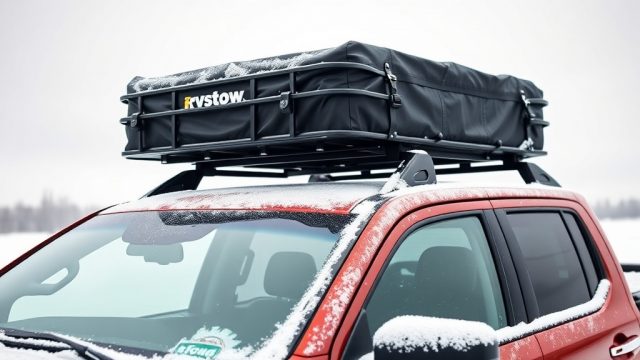
- “I paired the tie-down upgrade with a winterization cover for snow trips—no issues even with ice buildup.” — Reference the RVStow Roof Rack Cargo Basket Winterization Cover: Protect Your Gear from Snow & Ice.
Frequently Asked Questions
Q1: Can I add tie-down points without drilling holes?
A: Yes. Use clamp-on wire loops or adhesive anchor plates. These avoid permanent modification but may have slightly lower weight capacities (usually 300–400 lb per point).
Q2: What is the maximum safe load per upgraded tie-down point?
A: With a 1/4-inch D-ring bolted through a reinforcement plate, each point can safely handle up to 600 lb static load. Working load limit is typically 1,200 lb for the D-ring itself, but the basket’s crossbars are the limiting factor—keep individual loads under 200 lb per point for safety.
Q3: Will upgrading tie-down points affect my vehicle’s warranty?
A: Drilling or welding your roof rack basket typically voids the manufacturer’s warranty. However, non-permanent methods like clamp-on rings do not. Check your specific basket warranty terms before proceeding.
Q4: How often should I inspect the modified tie-down points?
A: After every long trip (over 500 miles) and before any heavy load. Check bolts for loosening, welds for cracks, and D-rings for deformation. Torque bolts to spec every 6 months.
Q5: Can I use the same tie-down points for both cargo net and ratchet straps?
A: Yes. Each D-ring can anchor a strap hook and a net hook simultaneously as long as the total load doesn’t exceed 200 lb per point. Use separate straps for different directions.
Q6: Do I need to repaint the basket after drilling new holes?
A: Yes, to prevent rust. Apply touch-up paint or a rust-inhibiting spray to the exposed steel around any new holes. A clear coat also helps maintain appearance.
For additional protection during winter storage, see the RVStow Roof Rack Cargo Basket Winterization Cover: Protect Your Gear from Snow & Ice guide.